 Asian Americans/Pacific Islanders in Philanthropy (AAPIP)
- This event has passed.
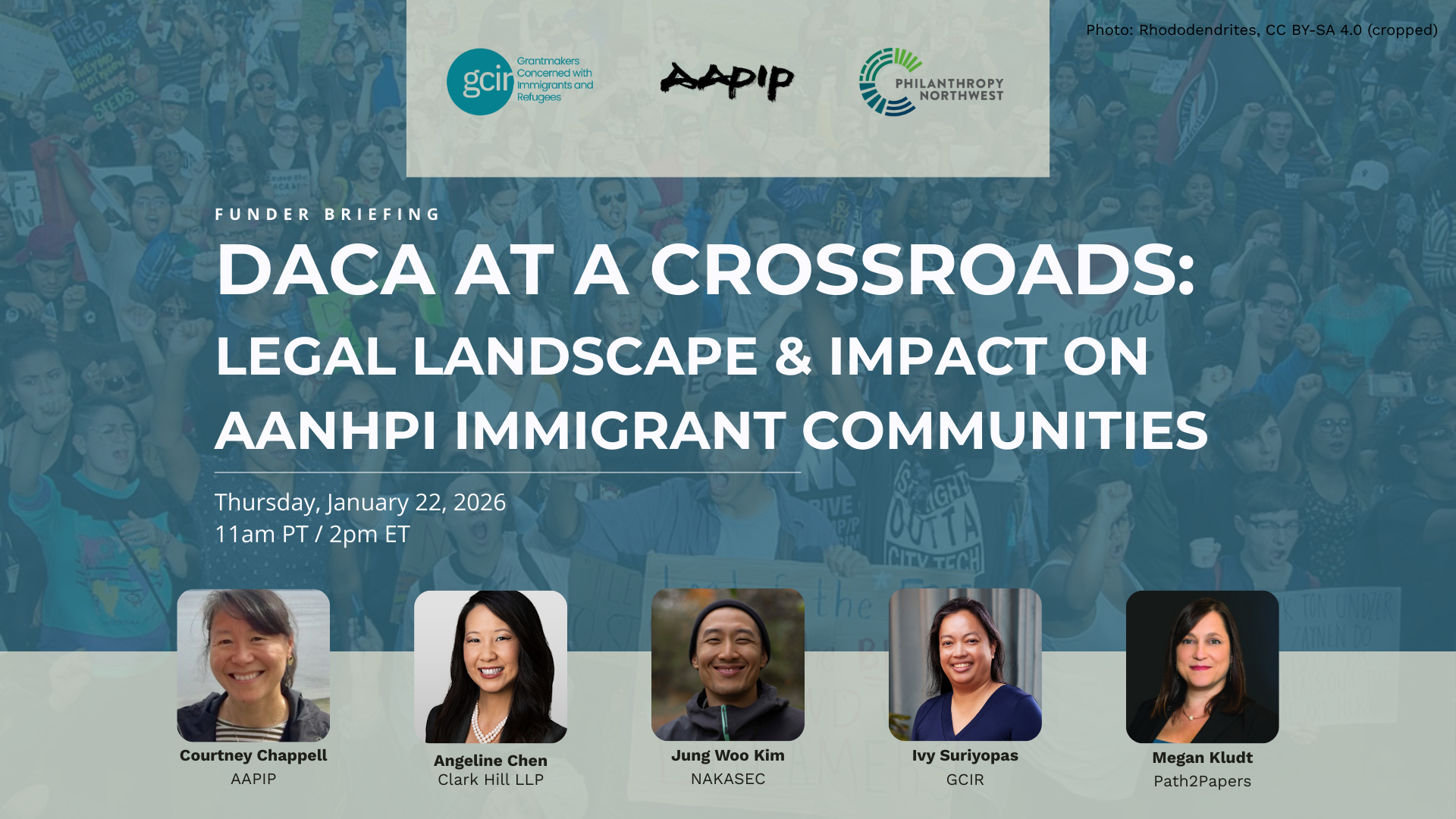
DACA at a Crossroads: Legal Landscape & Impact on AANHPI Immigrant Communities
January 22 @ 11:00 am - 12:00 pm PST
The Fifth Circuit Court of Appeals ruled major parts of DACA unlawful on January 17, 2025. Initial applications remain blocked nationwide. Processing delays are pushing current recipients out of status. Reports show DACA holders are being detained despite supposed protections.
If you’re making 2026 grantmaking decisions about immigration, youth development, racial equity, or economic mobility, you need to understand what these changes mean for 530,000 active DACA recipients including 390,000 from AANHPI communities who face distinct barriers to access.
This briefing provides the legal analysis and funding pathways you need before your next budget cycle.
The briefing will cover
- Current Legal Intelligence
Understand the Fifth Circuit ruling implications and how enforcement shifts affect DACA recipients and broader Dreamer populations. Get clarity on what protections remain and what’s at risk. - AANHPI-Specific Context
Learn why AANHPI Dreamers have lower DACA application rates despite eligibility, what cultural and linguistic barriers prevent access, and which organizations are successfully reaching these communities. - Proven Funding Models
See Path2Papers case study with concrete metrics on outcomes and replication potential. Hear how Ballmer Group made the internal case successfully for talking points you can adapt for your trustees. - Immediate Action Steps
Hear about specific funding vehicles, vetted AANHPI organizations, pooled funding contacts, and messaging to advance this work within your foundation.
Why This Matters to Your Portfolio
- Youth Development Funders: 530,000 young people with DACA face legal uncertainty affecting their education and employment pathways.
- Economic Mobility Funders: Dreamers contribute $65 billion annually to the economy. DACA recipients fill critical roles in healthcare, tech, and essential industries.
- Racial Equity Funders: 390,000 AANHPI Dreamers face compounded marginalization that your current grantees may not be reaching.
- Workforce & Education Funders: Processing delays and legal uncertainty affect talent pipelines in sectors your portfolio depends on.
- Exploring Immigration Work: This briefing provides the peer examples, internal messaging, and concrete entry points you need to move forward.
Speakers
- Angeline Chen, Senior Counsel, Clark Hill LLP
Legal expert on DACA litigation and immigration policy - Becky Belcore, Executive Director, National Korean American Service & Education Consortium (NAKASEC)
Community perspective on AANHPI Dreamers and current immigration landscape - Gabriella Barbosa, Senior Portfolio Manager, Ballmer Group
Funder perspective on strategic investments and internal advocacy - Ivy Suriyopas, Vice President of Programs, GCIR
Philanthropic infrastructure and resources for funders entering immigration work - Megan Kludt, Senior Attorney, Path2Papers, Cornell University Law School
Case study on innovative legal service model and replication pathways - Moderated by Courtney Chappell, Vice President of Programs, AAPIP
Agenda at a Glance
- Overview of Dreamers and current immigration landscape
- DACA program history, enrollment barriers, and AANHPI-specific challenges
- Path2Papers program model and replication potential
- Strategic funding approaches and making the internal case
- Collective action opportunities and resources
- Q&A
Context
Of 2.5 million Dreamers in the United States, 16% are from AANHPI communities. This represents 390,000 individuals from countries including India, China, the Philippines, and South Korea who face specific barriers: cultural stigma around undocumented status, language barriers in accessing legal services, and limited outreach from organizations focused primarily on other communities.
DACA provides no pathway to permanent residency or citizenship. The bipartisan Dream Act of 2025, introduced December 4, 2025, offers potential legislative solution—making this a critical moment for coordinated philanthropic action.
Who Should Attend
- Foundation program officers and trustees with grantmaking authority in immigration, racial equity, youth development, or economic mobility
- Family foundations and individual donors exploring immigrant rights funding
- Corporate foundation leaders whose companies employ DACA recipients
- Community foundation staff in regions with significant AANHPI immigrant populations
- Policy advocates working on immigrant rights who need funder education resources
Co-Sponsors
Asian Americans/Pacific Islanders in Philanthropy (AAPIP)
Grantmakers Concerned with Immigrants and Refugees (GCIR)
Philanthropy Northwest
This event is part of AAPIP’s Rooted in Resilience learning series, which examines the impact of immigration policy and enforcement on AANHPI families and communities.