 Asian Americans/Pacific Islanders in Philanthropy (AAPIP)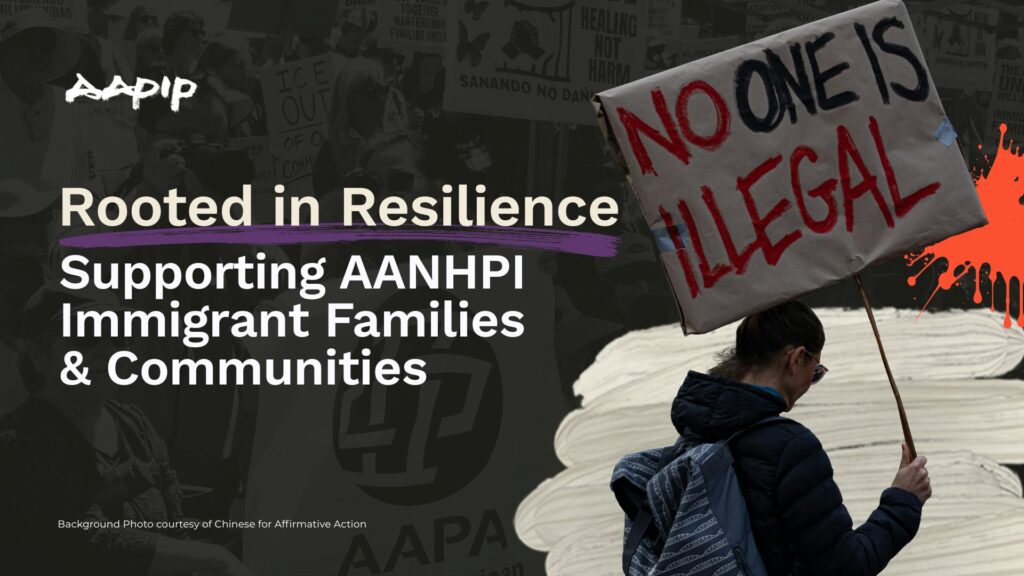
When Immigration Enforcement Escalates, AANHPI Communities Are Left in the Shadows
Immigration enforcement in the United States has intensified. Workplace raids, deportations, and detentions are increasing. AANHPI immigrant families are directly in the path of these policies, yet their experiences remain largely invisible in philanthropic funding and public discourse.
65% of Asian Americans and 27% of Native Hawaiians and Pacific Islanders are foreign-born. Asian Americans represent the fastest-growing undocumented population in the country. When enforcement actions happen, AANHPI workers, parents, and community members face detention, family separation, and economic devastation. The fear alone keeps families from accessing healthcare, attending school, or showing up to court-mandated appointments.
Philanthropy has missed this crisis. AANHPI immigrant communities receive a fraction of immigration-focused funding, even as enforcement actions reshape their daily lives.
Rooted in Resilience is AAPIP’s response, a learning series designed to inform funders, build cross-sector relationships, and resource the community organizations responding to this moment.
What This Series Offers
Each program connects you directly with community leaders navigating enforcement on the ground, legal experts tracking policy shifts, and philanthropic peers developing funding strategies that match the scale of need.
We invite you to:
- Understand the specific vulnerabilities facing undocumented, mixed-status, DACA, and refugee AANHPI families
- Identify concrete funding gaps in immigration support infrastructure, particularly in rural and underserved regions
- Learn from community-based organizations leading rapid response, safety planning, and family reunification efforts
- Build relationships with AANHPI advocates and peer funders committed to long-term investment
- Access practical tools for grantmaking at the intersection of immigration, economic security, healthcare, and family stability
This series operates at the nexus of education, relationship-building, and resource mobilization. You will leave each session with clarity on where philanthropic dollars can have immediate and sustained impact.
Why Join
AANHPI immigrants work in industries highly vulnerable to enforcement: hospitality, domestic work, small businesses, manufacturing. The raid at Hyundai in Savannah, Georgia, the largest single-site enforcement operation in U.S. history, exposed the systemic targeting of AANHPI workers and the gaps in community infrastructure to respond.
When parents are detained or deported, children are left behind. Families lose income overnight. Communities lose trust in institutions meant to support them.
Philanthropy can change this trajectory. But only if funders understand the landscape, resource the right organizations, and commit to multi-year support that strengthens community resilience rather than reactive crisis response.
If your portfolio includes immigration, racial equity, economic justice, family wellbeing, or healthcare access this series will sharpen your strategy and expand your network.
Who Should Participate
This series is for:
- Program officers and foundation staff managing racial equity, immigration, or justice portfolios
- CEOs and trustees seeking to align institutional strategy with community needs
- Philanthropic intermediaries and collaborative funds exploring coordinated investment
- Funders committed to cross-racial solidarity and movement alignment
You do not need to be an immigration funder to participate. Many AANHPI immigrant families intersect with multiple issue areas—education, housing, health, economic development. This series will help you see those connections and fund more holistically.
Get Involved
Join our mailing list to receive updates on upcoming briefings, resources, and opportunities to connect with community leaders.
Register for upcoming sessions as they are announced. Each briefing is an opportunity to deepen relationships, shift narratives, and move resources.
This series builds on AAPIP’s commitment to making AANHPI communities visible, resourced, and centered in movements for racial and economic justice.