 Asian Americans/Pacific Islanders in Philanthropy (AAPIP)
By Paul Ocampo, Consultant | Co-Chair, AAPIP SF Bay Area Chapter; Ammarah Maqsood, Sr. Director of Development, Huckleberry Youth Programs | Co-Chair, EPIP Bay Area Steering Committee; Jose Santacruz, Communications Associate, California Health Care Foundation | Co-Chair, EPIP Bay Area Steering Committee; Miguel Albarran Fernandez, Program Officer, San Francisco Foundation | EPIP Bay Area Steering Committee
If you’ve spent any time navigating philanthropy as a person of color, especially early in your career, you know how disorienting it can be. The culture is specific, there are ingrained power dynamics, and the unwritten rules are rarely explained. That was our experience, and it’s one we hear often from emerging professionals across the field.
That’s part of why we’ve been invested in the EPIP/AAPIP Bay Area Mentorship Program. Now in its third cycle and larger than ever, the program pairs emerging and mid-level professionals in philanthropy with seasoned mentors for a structured six-month partnership. This year, we have 17 active pairs.
Why a Joint Program?
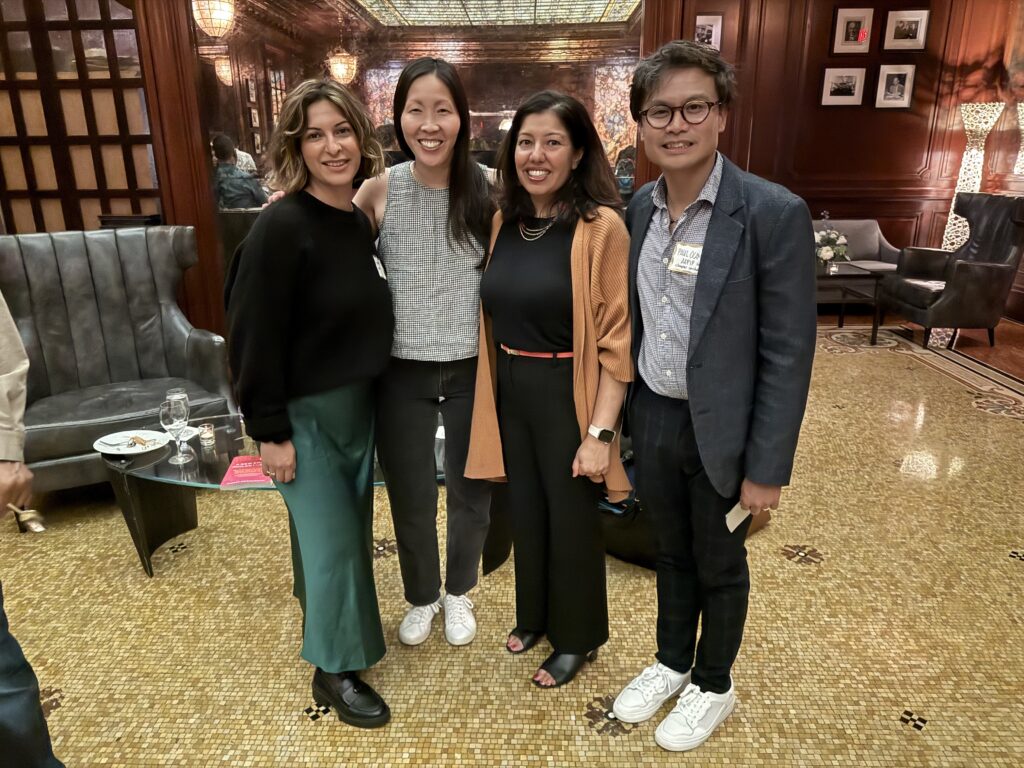
Both EPIP (Emerging Practitioners in Philanthropy) and AAPIP (Asian Americans/Pacific Islanders in Philanthropy) have run mentorship initiatives in the past. In the Bay Area, our membership pools have always overlapped significantly. By collaborating we accessed a broader network, a more diverse mentor pool, and a stronger pipeline for the field.
“We decided to collaborate so we could have a broader pool of mentors and a more robust approach to leadership development in the Bay Area. We’ve seen similar faces come through both organizations for years.” – Jose Santacruz
The joint program launched formally in 2021, a moment when philanthropy, like the rest of the country, was reckoning with racial injustice and what solidarity across communities of color actually looks like in practice. We saw an opportunity to model affinity group chapters working together toward shared goals.
The program is also a direct investment in BIPOC professionals. Onboarding into philanthropy is hard under any circumstances. When you’re coming from a background that feels far from philanthropy and you simply don’t have a network of people who’ve been in these rooms before, it’s a different challenge entirely. The mentorship program exists to fill that gap with something concrete: access, relationships, and guidance from people who have been there.
How It Works
This year, the program runs from August through February. Matching takes time. We’re deliberate about pairing people based on shared issue areas, career goals, and background, so the application and selection process typically runs through the summer.
Once matched, pairs meet at least once a month, in whatever format works for them. The program provides a handbook with frameworks and activity ideas to help structure those conversations, but the relationship itself is co-intentional, meaning both mentor and mentee bring goals and show up as learners.
Cohort events bookend the experience: a kickoff where everyone meets each other across pairs, informal gatherings like happy hours throughout the program, and a closing ceremony to celebrate what’s been built. Philanthropy can be isolating, and being in a room with others who are navigating the same conditions and recognizing that the tensions you feel aren’t unique to your institution is its own form of support.
What the Program Is Addressing
Two needs keep surfacing.
There’s no established onboarding pathway into philanthropy. There’s no handbook for how to read a room at a foundation, how to build relationships across the funder-grantee divide, or how to move from one role to the next. Mentors fill that function, providing practical guidance.
“One of the things that keeps coming up, especially in the last two years, is emerging professionals not fully knowing the philanthropic ecosystem, having this feeling of ‘I’m just a program associate, I don’t know the impact I can make.’ The mentorship program helps people recognize what’s actually in their control.” Ammarah Maqsood
The second gap is less talked about but just as significant: philanthropic institutions rarely make clear what staff at any level are actually positioned to influence, advocate for, or change. That ambiguity hits harder when you’re newer to the field, or when you don’t have networks that explain how power actually moves in these spaces. A mentor who can name that dynamic and share how they’ve navigated it gives emerging professionals an honest map to use their voices.
“These spaces can be politically complex, and venting to co-workers isn’t always safe. Being able to talk through challenges with a mentor, someone outside your institution who can normalize what you’re experiencing and share how they’ve navigated it, that was one of the most valuable things about the program for me.” Miguel Albarran Fernandez
The Program’s Continuity
Former mentees have gone on to join our steering committee. Some who came through earlier cycles as mentees are now mentors themselves. Miguel came through the program as a mentee, and has been a driving force behind it since. That cycle is exactly what we’re building toward.

What Comes Next
Running a mentorship program of this scope takes significant time, coordination, and resources, currently sustained almost entirely by volunteer effort. Philanthropy has a real opportunity to resource this kind of work, and we’d welcome those conversations.
“We’ve been doing this for three cycles now because it’s a genuinely impactful program. Mentorship is a big gap in the field, and closing it requires real investment, not just volunteer hours.” Jose Santacruz
Our 2025 cohort includes mentors from across the philanthropic spectrum, community foundations, family foundations, legal advocacy, arts, healthcare, immigration, reflecting the range of the field itself. We hope that you can join us and support our program.
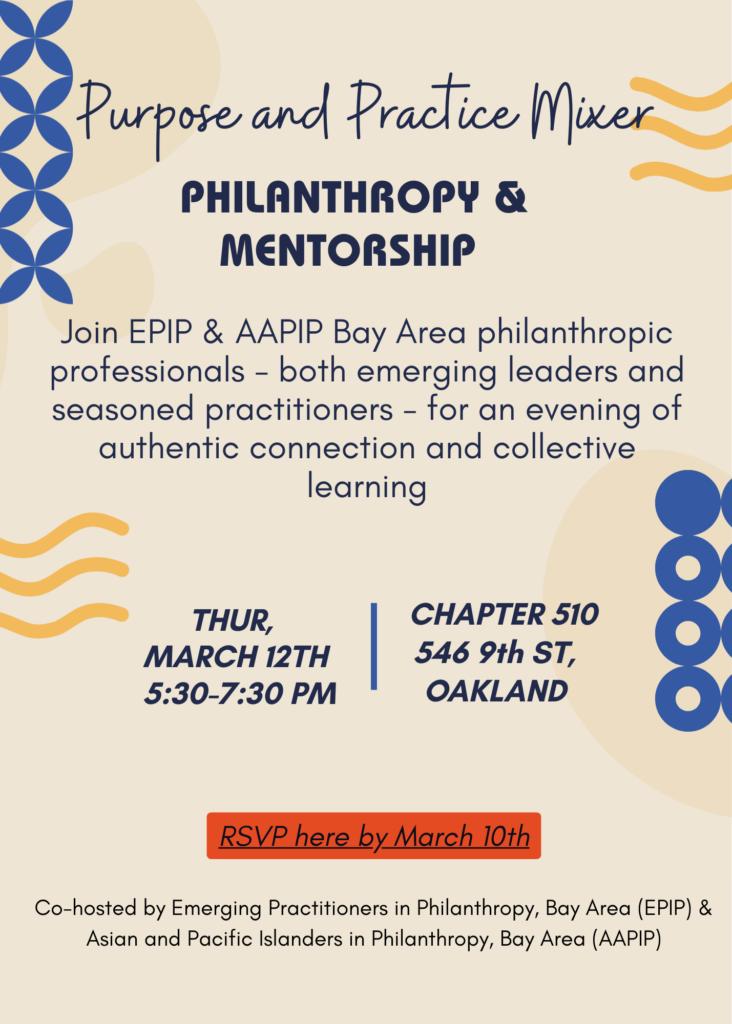
If you’re an experienced practitioner interested in mentoring, or an emerging professional who wants in on the next cycle, please reach out. We also invite our AAPIP and EPIP community to join us for our Power & Purpose Mixer on Thursday, March 12, from 5:30-7:30 p.m. in Oakland. To get in touch and/or RSVP for our Purpose and Practice Mixer, please fill out this form.