
AAPIP Statement on the Supreme Court’s Birthright Citizenship Ruling

Today, the Supreme Court ruled 6-3 that the Constitution guarantees birthright citizenship to children born in the United States, rejecting the executive order that sought to strip that right from children of undocumented and visa-holding parents. The decision reaffirms more than 150 years of precedent dating back to United States v. Wong Kim Ark.
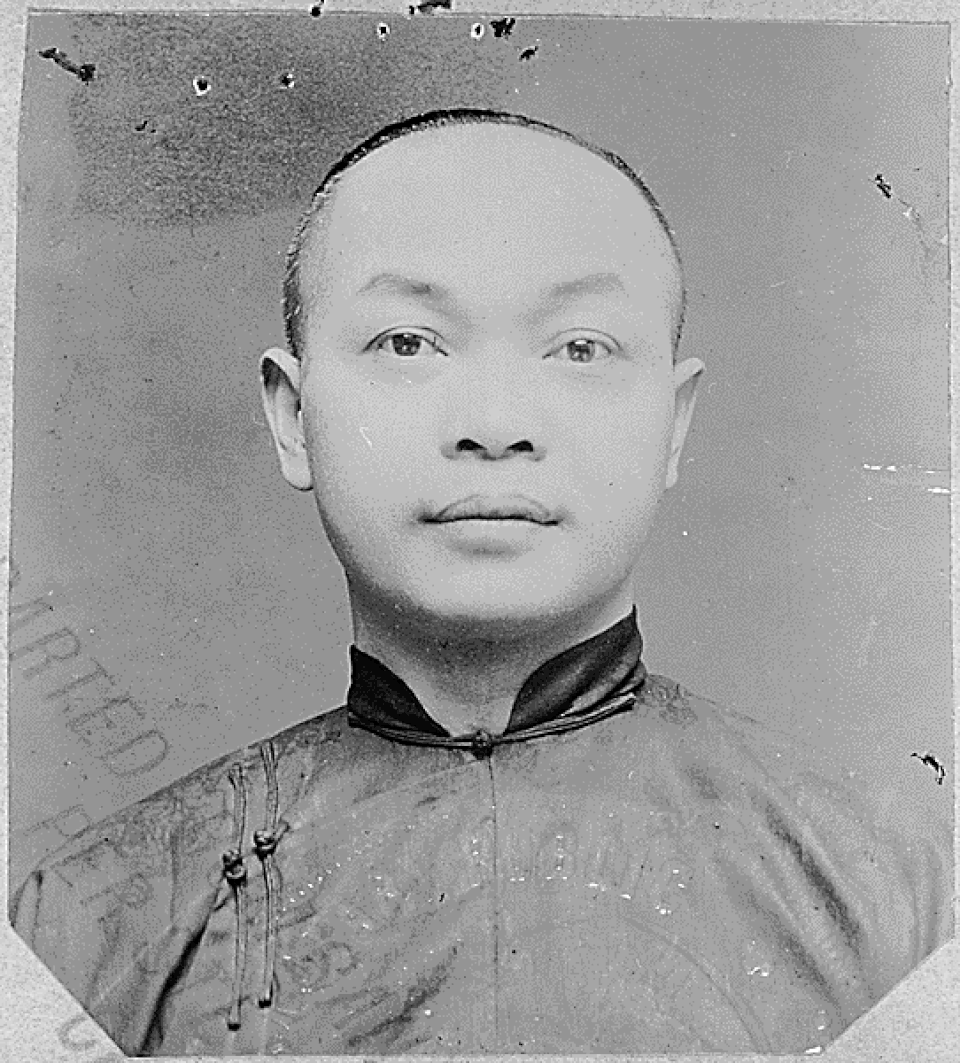
Wong Kim Ark

This is the outcome AANHPI communities and our allies organized for. Wong Kim Ark was a Chinese American man denied re-entry to the United States, the only country he had ever called home. His case built the legal foundation that protected newborns in Japanese American incarceration camps during World War II, and it is the same foundation the Court upheld today. The attorney who argued this case before the Supreme Court in April, Cecillia Wang of the ACLU, is herself a birthright citizen born to Chinese parents. AANHPI history is the past and present of this case. 

This ruling did not happen by accident. It happened because civil rights attorneys, community organizers, and the philanthropic funders who backed them treated this as a fight worth winning. Every lower court that reviewed this executive order rejected it before the case ever reached the Supreme Court. That track record reflects sustained investment in legal infrastructure.

A 6-3 ruling is not the end of this fight. The dissent signals that three justices were prepared to narrow constitutional citizenship, and a future Congress or administration may try again through legislation rather than executive order. The legal architecture that won today needs continued support.

AAPIP is asking funders to act on three fronts:

  • First, sustain investment in the legal and organizing infrastructure that made today’s win possible, including organizations like Asian Law Caucus, The Asian American Legal Defense and Education Fund, and the broader Asian Americans Advancing Justice affiliation. Litigation capacity built over years, not months, is what wins cases like this one.
  • Second, fund the narrative and civic engagement work needed to prevent this fight from resurfacing through state legislatures or proof-of-citizenship voting restrictions, which would disproportionately affect AANHPI communities.
  • Third, support healing and safety resources for communities that spent the better part of a year under the threat of statelessness.

The READI Initiative and Level Up Campaign are both structured to direct philanthropic dollars toward exactly this kind of sustained, time-sensitive investment. We are asking funders who have not yet engaged with either to do so now rather than waiting for the next crisis to force the conversation.

We are grateful to the coalition of organizations and attorneys who built the case for today’s decision. We will continue working alongside them.