 Asian Americans/Pacific Islanders in Philanthropy (AAPIP)
By Rupal Soni, Project Manager, AAPIP Chicago, with Mark Anthony Florido, Senior Program Officer, Paul Angell Foundation
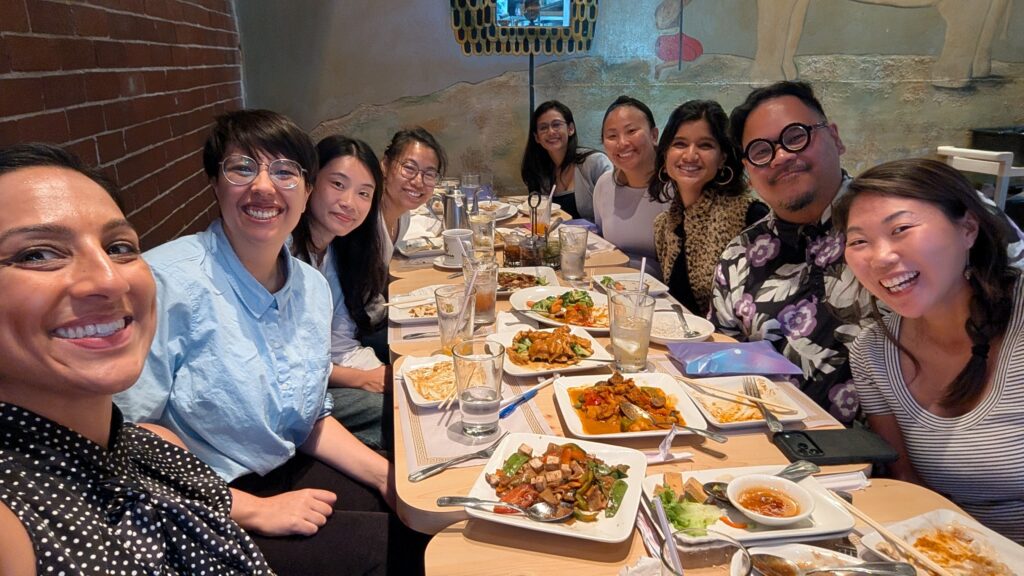
Working in philanthropy is a privilege, but it is not always easy. So a place to put your guard down and talk honestly about the work means a lot.
That’s why we started the AAPIP Chicago peer mentorship program. Building this program to support our philanthropic ecosystem here was a “wish-list” program for our AAPIP Chicago Co-Chair, Sonia Mathew, and our chapter finally had the internal capacity to build it. I developed and tested a pilot of the program starting in 2024. Mark Anthony Florido was a participant in that first pilot cohort. This year he returned to co-lead the second cohort with me.
Not building from scratch
Before designing anything, I talked with people who had built similar programs. Sonia connected me with Daniel Maiuri, who built the AAPIP Mentorship Program on the east coast, so I could get a sense of what he learned from his local context. I also looked at how our sibling affinity groups, Chicago Latines in Philanthropy, Chicago African Americans in Philanthropy, Chicago Women in Philanthropy, and Emerging Practitioners in Philanthropy were leading their programming around mentorships, fellowships, communities of practice, and community building.
Mentorship is the wrong word
Mark Anthony and I both think “mentorship” undersells what happened. Nobody was there to climb a ladder. Participants found accomplices, cheerleaders, thought partners, and friends. These were people who would challenge them, celebrate them, get how strange this work can be, and who helped them keep going.
We built the program as peer-to-peer on purpose. Nobody played the expert, and we ignored hierarchy to focus on everyone coming to the table with a perspective and experience to share. The intention was to have everyone learn from the exchange.
How it worked
Both cohorts ran nine months with 10 to 12 people. We recruited through our chapter email listserv and LinkedIn group, plus direct outreach to people we thought would be interested.
Year one (2025). Our steering committee grouped applicants into pairs and triads and I gave participants light scaffolding to structure the program: suggestions on when and how to meet, monthly talking points, and a couple of in-person gatherings for the full cohort. It was designed as a “Choose Your Own Adventure” program. Mark Anthony’s group turned its meetings into a supper club trying Asian-owned restaurants across the city. Food is how many of us show love and welcome people, so it fit. And then it grew! He has since started the column, “Meals with Mark Anthony,” for our chapter email listserv, as a way to explore the people, ideas, and conversations shaping philanthropy while breaking bread with a colleague in the field.
Year two (2026). Mark Anthony and I loosened the structure. Everyone was placed in a triad, and we matched people intentionally based on what each person was interested in exploring. We added regular virtual meetings for the full cohort with little agenda. People brought questions about work, philanthropy, and life transitions, and sometimes the meeting was just silly. Participants co-built the program with us as we went, and that was the best part.
Why joy mattered
Philanthropy can take itself too seriously, so silliness was woven in on purpose. When you build the container to prioritize joy, it helps others put their guard down. The first year, I presented everyone with a certificate awarded from the nationally accredited– and very official– Institute of Awesomeness. I have no doubt that each participant will frame and hang these in a place of honor, probably next to their college diplomas.
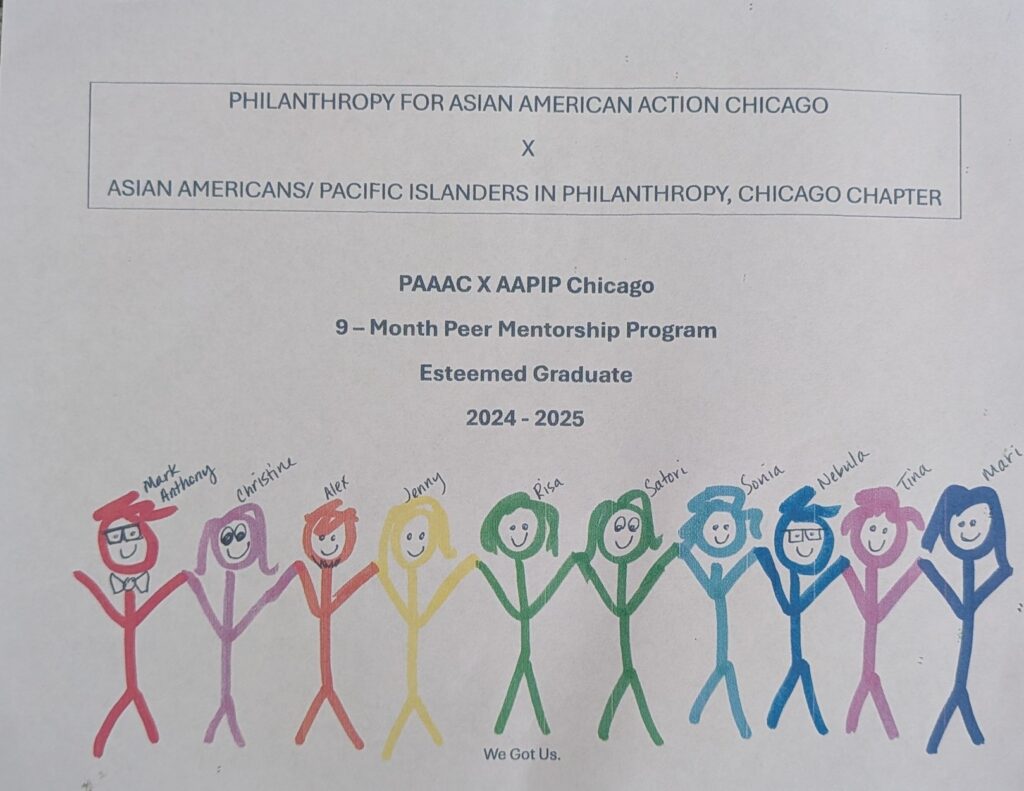
When we closed out the second cohort with a graduation dinner in October, we continued this very credible certification ceremony. Mark Anthony put it this way, “If you can’t laugh with each other, how do you trust each other? Laughing together helps when the work asks you to be serious and sad most of the time. Philanthropy attracts people who care deeply and work hard for the issues they care about. It is critical to find spaces to put all that down in community, to exhale, and to laugh together.”
What we learned
One finding was consistent: the more often groups met, the deeper their relationships went. Self determined schedules enabled participants to adapt the program to the cadence they needed. The first-year cohort still talks on a WhatsApp chat that rises and falls with the connection and resources the group needs.
We also kept mentorship from turning into professional development, because career help is welcome but a program like this works best when it feels like gathering with your people instead of another meeting on your calendar.
“There are so few spaces in philanthropy where we can show up as our whole selves, especially as Asian Americans. What made this experience special wasn’t just having people who understood the work, but finding people who understood me beyond the work. We showed up for each other through some really difficult moments, shared a lot of meals and laughter, and built friendships that have lasted well beyond the program. That’s what I wanted to pay forward. Mentorship shouldn’t just help us become better professionals. It should help us feel less alone,” says Mark Anthony. He wanted to pay forward what his own triad gave him, since all three members were going through heavy things during the pilot and still keep in touch and plan meals together.
What other chapters can borrow
Local context should shape the structure. If members are spread out, virtual meetings may work better. If your pool is small, meet as a full cohort more often. Whatever the format, here is what we would repeat anywhere:
- Make room for joy and silliness. Not every gathering needs an agenda, a learning objective, or a tangible deliverable. Sometimes the most meaningful connections happen over a shared meal, a ridiculous icebreaker, or a conversation that has absolutely nothing to do with philanthropy. Joy isn’t a distraction from the work. It’s part of what sustains us in it.
- Build with people, not just for them. We resisted the temptation to overdesign the experience. Participants helped shape what the program became, from how often they met to what they wanted to explore together. Giving people ownership created a stronger sense of investment and reminded us that community building is something we do collectively, not something we deliver to others.
- Be intentional about relationships, but flexible about structure. We put thought into how we matched participants, recognizing that shared interests, experiences, and questions could create opportunities for connection. But we also trusted people to figure out what worked for them. Some groups needed more structure, while others thrived with less. The important thing was creating enough support to get relationships started without prescribing what those relationships should become.
- Leave hierarchy at the door. One of the most powerful things about peer mentorship is recognizing that everyone has something to teach and something to learn, regardless of title, tenure, or where they sit within philanthropy. We wanted people to show up as their whole selves, not just their professional identities. That meant making space for vulnerability, honest conversations, and the occasional admission that none of us really knows what we’re doing all the time.
- Think beyond the program. A successful mentorship program shouldn’t be measured only by attendance, professional growth, or how many meetings took place. We were just as interested in what happened after the program ended. Are people still checking in on one another? Are they sharing opportunities, showing up during difficult moments, or making plans to grab dinner? Those relationships are the real impact, and they don’t need to end when the calendar says the program is over.
Ultimately, we learned that building community doesn’t have to be complicated, but it does require intention. Especially in a field that can feel isolating, competitive, and overly focused on professional achievement, creating spaces where people feel seen, supported, and connected is meaningful in itself.
And this work doesn’t stop within our own community. In Chicago, our relationships with sibling affinity groups, including Chicago Latines in Philanthropy and Chicago African Americans in Philanthropy, remind us that building strong communities within our respective identities can also strengthen the trust, relationships, and solidarity we need to show up for one another across communities.
If there’s one thing we’d encourage other chapters to remember, it’s this: Don’t get so caught up in building a mentorship program that you forget you’re really building community.
What comes next
The context and landscape has changed since the pilot, so we can’t yet say what the program looks like next year, but we are excited to keep iterating the program to intentionally build trust and community in Chicago. We have so much gratitude for our Chicago Co-Chairs, Sonia Mathew and Steve Moon, and our Steering Committee members Rhea Yap and Tuyet Ngo.
If you want to build a program like this in your city, we are glad to ideate with you and be a sounding board. You can reach us at paaacinfo@gmail.com.